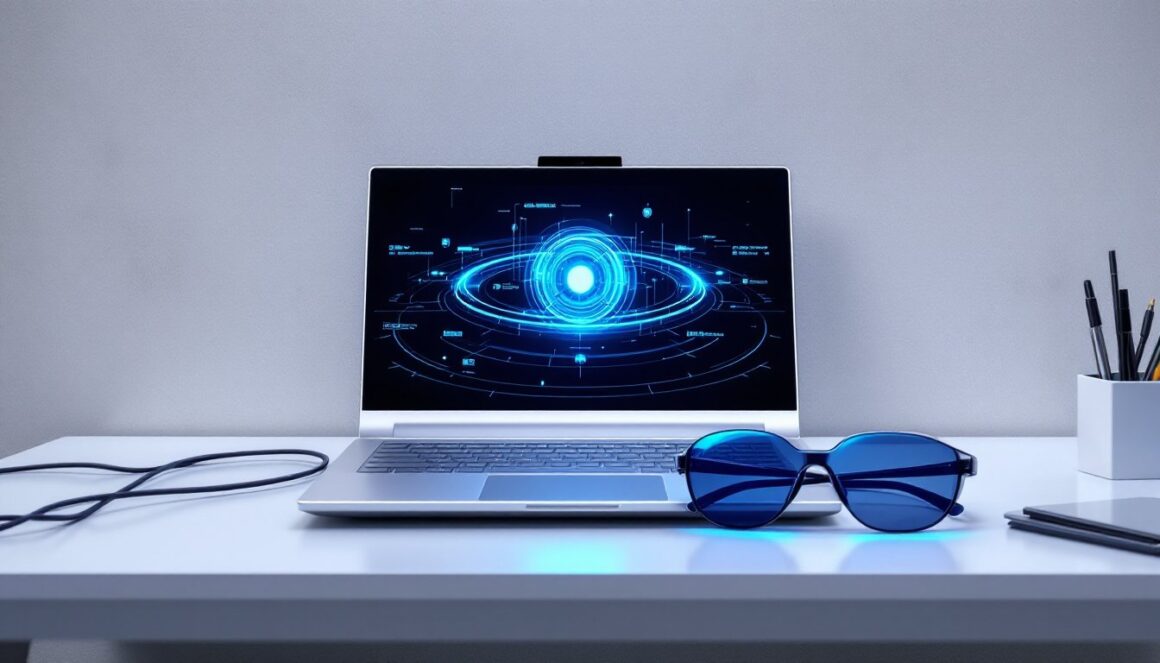
The plumber estate modern video ebook bouncemediagroup arrives as a clear step for interactive laptops. The device pairs a high‑refresh laptop with eye‑tracking glasses. Reviewers test display, sensor accuracy, and battery life. Readers will learn what the hardware offers, how the eye‑tracking glasses work, and what to check before they buy.
Key Takeaways
- The SpatialLabs Edition BounceMediaGroup laptop eye tracking glasses bundle features a 15.6-inch 4K 144Hz display paired with compact, lightweight eye-tracking glasses for hands-free control.
- Eye-tracking glasses use infrared LEDs and cameras to map gaze vectors, enabling applications like selective focus, cursor control, and gaze-based UI in games and creative tools.
- Setup is straightforward with a USB-C radio dongle and five-point calibration, and the system supports Windows 11, Linux, and popular engines like Unity and Unreal.
- Battery life ranges from five to eight hours, with fast charging for the laptop and USB-C recharge for the glasses, designed for comfortable long-term use.
- The package is ideal for creators, AR testers, and gamers seeking interactive depth preview without bulky headsets, though it performs best indoors under controlled lighting.
- Buyers should verify warranty, service options, and fit, and consider the SpatialLabs Edition as a premium, integrated eye tracking laptop solution for professional workflows.
What The SpatialLabs Edition Packs: Specs, Design, And Unique Hardware
The SpatialLabs Edition BounceMediaGroup laptop eye tracking glasses package centres on a 15.6‑inch 4K display with a 144Hz refresh rate. The laptop ships with an Intel Core Ultra processor, 32GB RAM, and a 1TB SSD. The system includes an NVIDIA RTX 40‑series GPU option for GPU‑accelerated rendering. The laptop body uses aluminum and a cooling vapor chamber. The keyboard feels firm and the hinge allows a full flat lay.
The bundle includes compact eye‑tracking glasses that pair via a dedicated USB‑C radio module. The glasses house infrared LEDs and inward‑facing cameras. The laptop adds a firmware bridge that reads gaze vectors and feeds them to the display compositor. BounceMediaGroup places the radio dongle and a camera calibration tool in the box.
Battery life runs between five and eight hours under mixed workloads. The glasses draw power from their internal battery and recharge through a USB‑C cradle. The laptop supports fast charge for the main battery and a low‑power mode for long viewing sessions.
The design prioritizes user comfort for extended use. The glasses weigh roughly 40 grams and include three nose‑pad sizes. The laptop keeps ports on the left and right: two USB‑C, two USB‑A, HDMI 2.1, and an SD card slot. The hinge hides vents for a cleaner look.
The SpatialLabs Edition BounceMediaGroup laptop eye tracking glasses bundle aims to reduce cable clutter. The package trades a separate headset for compact glasses and a single dongle. Buyers get a single ecosystem that links GPU rendering, display parallax, and eye input. The product seeks to appeal to creators, AR testers, and gamers who want hands‑free control.
How The Integrated Eye‑Tracking Glasses Work: Tech, Software, And Real‑World Use Cases
The glasses track pupil position and map it to screen coordinates. The laptop runs a compositor that blends stereo parallax with gaze depth. The software uses a light‑weight driver that runs at 120Hz for gaze updates and at the display refresh for rendering. The driver reduces latency by processing gaze on the laptop CPU and offloading heavy rendering to the GPU.
Applications include selective focus in video editors, cursor control in productivity apps, and gaze‑based UI in games. The glasses allow depth cues when viewing 3D models and scenes. Designers use the combo to preview depth without a headset. Game developers test aim assistance and gaze‑based HUDs. Broadcast teams use the setup for on‑air teleprompter control.
The software bundles a plugin SDK. The SDK exposes gaze vectors, fixation points, and blink events. Developers can add gaze to Unity and Unreal scenes. The system supports system‑level accessibility: gaze can replace mouse input for users with limited mobility.
The glasses and laptop together enable a low‑weight AR testing workflow. The solution works better in indoor, controlled lighting. Bright sunlight reduces tracking accuracy. The system compensates with adaptive IR power and a secondary face model.
The SpatialLabs Edition BounceMediaGroup laptop eye tracking glasses set ships with display profiles for color accuracy. The package supports industry color spaces and simple LUT loading for creators. The laptop supports both native 3D content and simulated depth via the compositor.
Industry writers predict broader use of eye input for hands‑free control in sports broadcasts and betting experiences that blend live feeds with overlays. For example, reporting on trends in VR and betting notes growing interest in immersive inputs and AR displays for viewers and bettors, which aligns with hardware moves like this one (future sports betting).
Setup, Compatibility, Performance Tips, And Buying Considerations
Setup takes three steps. Users plug the radio dongle into USB‑C. They pair the glasses in the settings app. They run a five‑point calibration that stores a user profile.
Compatibility covers Windows 11 and recent Linux kernels with vendor drivers. The software lists Unity 2021+, Unreal Engine 5, and common creative apps. The SDK includes simple examples and a calibration API.
Performance tips reduce jitter. Users should calibrate at arm’s length in neutral light. They should update firmware on both laptop and glasses before heavy use. They should close background apps that use camera resources. For gaming, users should set the GPU to high‑performance mode and allow the compositor exclusive GPU time.
Buyers should check for local service and spare glass lenses. They should confirm the return policy and warranty for both the laptop and the glasses. They should test headset fit and confirm the nose pads match their face. They should consider the work they will do: the SpatialLabs Edition BounceMediaGroup laptop eye tracking glasses pair fits design review and light AR testing better than heavy outdoor AR.
Price sits in the premium range. The bundle aims at professionals and early adopters. For buyers who want simple gaze input on a standard laptop, cheaper eye trackers exist. For those who want blended depth preview without a full headset, the SpatialLabs Edition BounceMediaGroup laptop eye tracking glasses package offers a compact option.
Final purchase checks include testing gaze accuracy with a sample file, verifying color profiles, and confirming SDK access. Reviewers praise the integrated flow and the light glasses, and they note that tracking improves with firmware updates. The product offers a practical step into gaze‑driven workflows.